Maple Ridge unanimously adopts tougher tree protection bylaw to curb canopy loss and boost replanting
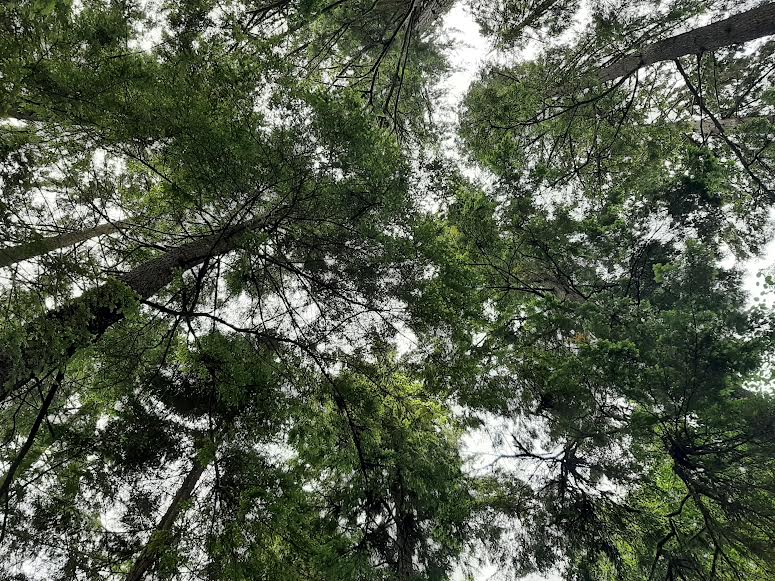
Maple Ridge has unanimously adopted an overhaul of its tree protection rules, with council backing a new bylaw aimed at preserving mature trees and expanding the city’s urban canopy as development pressures intensify.
Council gave final approval to the Tree Protection and Management Bylaw on April 28, replacing a framework that had been in place for more than a decade.
Speaking during the meeting, Coun. Sunny Schiller said the bylaw reflects a fundamental shift toward prioritizing retention.
“We’re just operating from a philosophy that when we have a tree, we keep the tree, and if that is not possible, then we replace it with another tree, or more than one new tree,” Schiller said. “Ultimately, we’ve set an important goal to protect and expand our urban forest, and this bylaw aligns with that goal and will play an important part in getting us where we want to be.”
The bylaw update is tied directly to the city’s 2024 Urban Forest Management Plan and its long-term target of reaching 40 percent tree canopy coverage by 2050.
With the new rules in place, there are strengthened protections for existing trees, particularly larger and mature specimens, and the introduction of clearer rules around when removals are permitted and how replacement planting must occur.
Staff say the changes are intended to strike a balance between accommodating growth and preventing further loss of tree canopy – especially on private land, where roughly half of Maple Ridge’s trees are located
Among the most significant changes is a new requirement that all tree removals – not just large or “significant” trees – must meet defined criteria, such as safety hazards, conflicts with infrastructure, or development needs.
The bylaw also separates tree removal applications into two streams: one for residential properties and another for development, allowing for different rules and cost structures.
Replacement requirements have also been tightened. The updated framework generally requires at least a one-to-one replacement ratio for single tree removals, with higher ratios for multiple or larger trees, and aligns planting targets with the city’s broader canopy goals. Where planting isn’t feasible, developers may be required to pay cash-in-lieu into a municipal tree reserve fund that will be used for future planting initiatives.
Schiller pointed to recent policy work – including the adoption of the urban forest management strategy – as laying the groundwork for the overhaul, and said improved data collection will be key to measuring its success.
“I wish we had better information available about the number of trees that are lost to development versus the number of trees removed by individual property owners,” she said. “Now that we’re separating these two kinds of requests, I hope that that can be tracked to allow us to further calibrate our bylaw in the future.”
The bylaw also lowers the threshold for requiring a formal tree management plan on development sites (from 20 trees to 10), and expands the use of arborist reports, which will now be required for most applications beyond single-tree removals. It also introduces stricter rules around tree protection during construction, including updated standards for defining critical root zones.
City staff have said the changes reflect best practices across Metro Vancouver and respond to strong public support for tighter tree protections.
Engagement conducted as part of the urban forest plan found widespread backing for measures such as retaining healthy trees and requiring replacement planting when removals occur.
Schiller acknowledged the challenge of crafting a single bylaw that applies equally across Maple Ridge’s diverse landscape, from dense urban neighbourhoods to rural areas.
“I think it’s incredibly difficult to land on one set of rules that works for residents in Town Centre and for residents in Whonnock,” she said. “So the best we can do is to approach this from a clear understanding of what our community priorities are, which are to protect the trees.”
She added that trees should be viewed differently from other municipal assets.
“Trees give so much to our community: providing shade, holding on to water, giving us air to breathe. Trees make for a livable community, and we know that our residents want the city to be protecting them and taking care of them,” she said.
Unlike infrastructure such as sidewalks or pipes, she noted, trees are living systems that require long-term stewardship and monitoring.
The bylaw also adjusts fee structures to discourage large-scale removals, introduces clearer rules around securities and enforcement, and formalizes how funds collected through penalties or cash-in-lieu contributions are reinvested into tree planting and maintenance.
Council’s approval marks the culmination of a multi-year review process, with staff and advisory committees working through technical changes and policy direction since the urban forest plan was endorsed in 2024.