Maple Ridge eyes restoration of McKenney Creek as development pressures grow

Maple Ridge is advancing plans to restore and protect McKenney Creek, with staff warning council rapid urban development and climate change could significantly increase flooding, erosion and pollution risks along the heavily altered waterway.
At an April 7 committee meeting, council received an update on the McKenney Creek Restoration and Enhancement Plan, a long-awaited strategy aimed at improving the creek’s ecological health while accommodating growth in the Lougheed Transit Corridor.
“It seems very possible to lose ground with all this development,” said Joe Dingwall, the city’s manager of utility engineering. “What once was absorbing rainfall is now just going to sheet it off and send it quickly into the adjacent stream, which is going to result, if unmitigated, in higher peak flows, erosion and flooding.”
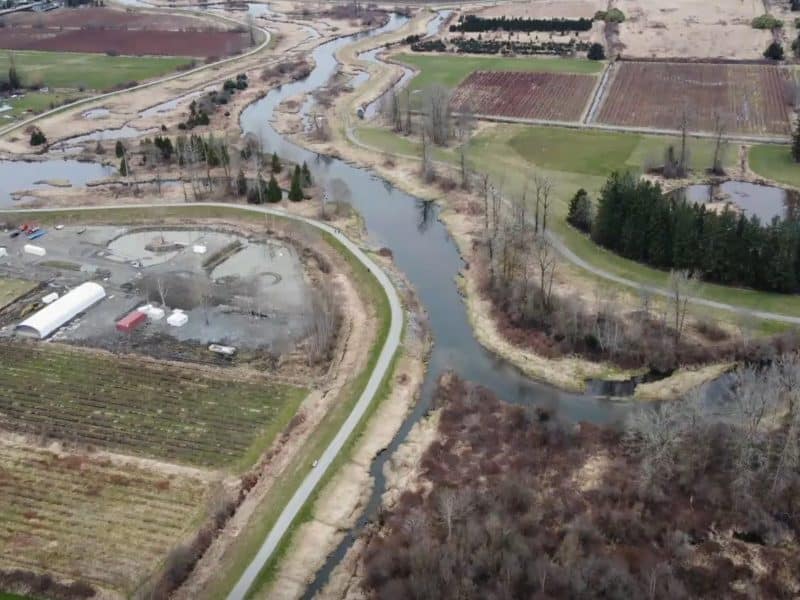
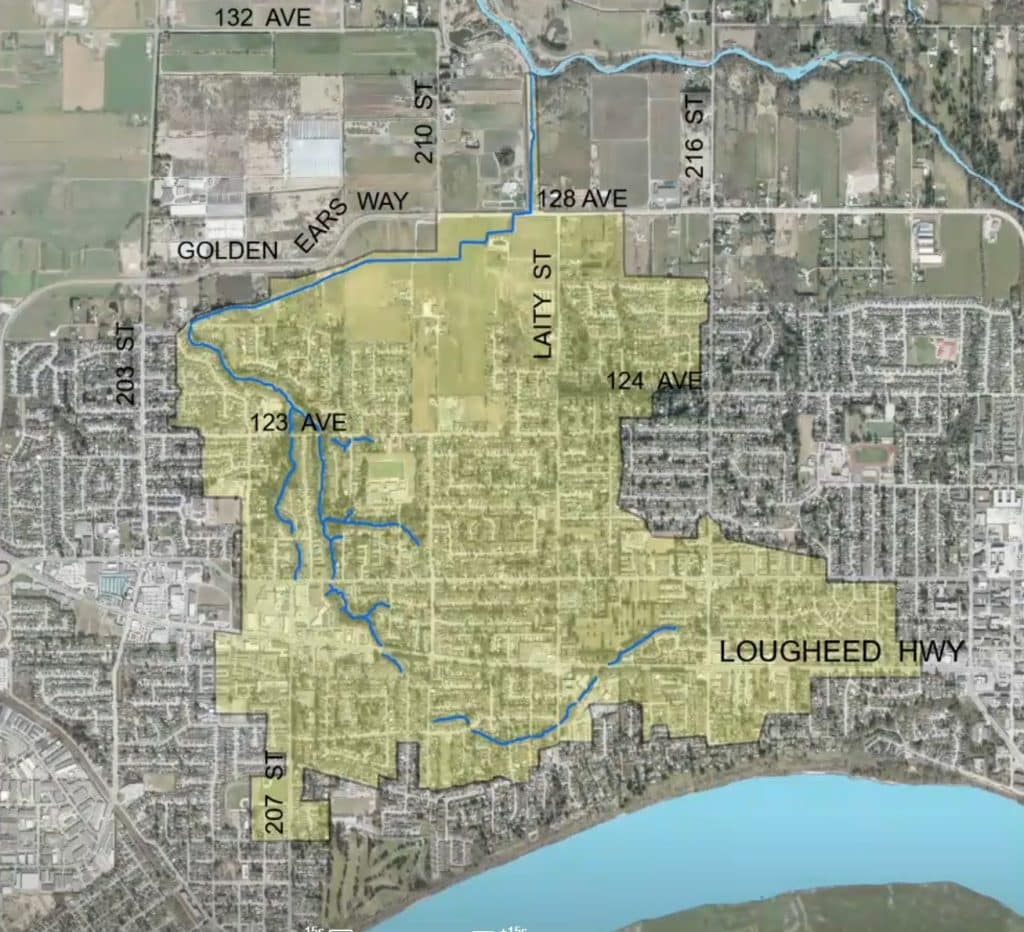
The creek, which runs through a roughly 500-hectare catchment stretching from urban areas into the Agricultural Land Reserve, has already been heavily impacted by decades of development, though staff say it still holds “tremendous potential” as a natural asset.
Staff identified urban intensification in the Lougheed Transit Corridor Area Plan (LTCAP) as the single biggest future pressure on the creek.
As redevelopment replaces permeable surfaces like lawns with rooftops and pavement, rainwater that was once absorbed into the ground will instead be rapidly funnelled into the creek system.
Dingwall said the lands within the Lougheed Transit Corridor Area Plan (LTCAP) will be the most impacted due to the expected development.
The LTCAP is a long-term planning framework guiding transit-oriented growth in Maple Ridge, focusing on densifying housing, jobs, and amenities along Lougheed Highway and Dewdney Trunk Road around future rapid transit stations.
“This is going to be the greatest challenge, which was going to require the most focus and intervention to control the impacts,” Dingwall said.
At the same time, projected increases in precipitation tied to climate change are expected to further increase water volumes in the system, compounding those risks.
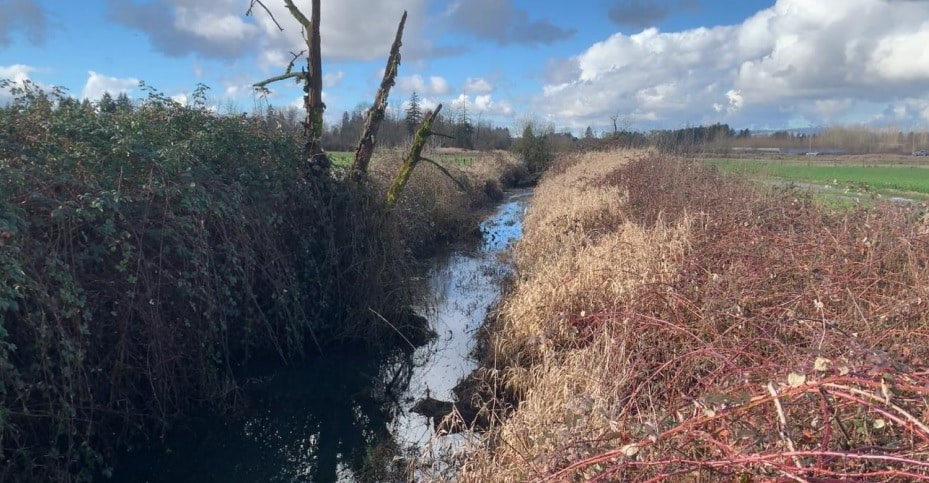
Existing issues are also significant, including degraded riparian areas, invasive plant species such as Himalayan blackberry and reed canary grass, and polluted stormwater runoff carrying contaminants from roads and urban activity.
Dingwall told council that much of McKenney Creek no longer resembles a natural stream, pointing to decades of alteration that have stripped away key ecological features.
In several sections, he said, the creek lacks the vegetated riparian buffers that would typically provide shade, stabilize banks and support aquatic life
That loss of natural function is compounded by invasive plant species and urban impacts, meaning restoration efforts will need to focus not just on managing future development, but on rebuilding the creek’s basic ecological structure.
One of the major challenges flagged by staff is the Fraser River escarpment, where city policy restricts rainwater infiltration due to geotechnical concerns.
That limits one of the most effective stormwater management tools – allowing water to soak into the ground – forcing the city to look at alternative solutions.
“If you can’t infiltrate it, you cannot reduce the volume,” Dingwall said, noting the city may instead need to focus on slowing water flows and reducing peak surges.
Additional hurdles include the creek’s path across both public and private land, meaning some restoration work may depend on land dedications through redevelopment or agreements with property owners.
Funding will also be a key factor, with the current study phase budgeted at about $200,000 and future capital costs yet to be determined.
Despite the challenges, staff outlined a range of potential interventions to improve the creek’s health, including:
- Capturing and slowly releasing rainwater through on-site storage systems
- Expanding green spaces to absorb runoff
- Installing filtration features to remove pollutants before water enters the creek
- Upgrading drainage infrastructure to reduce flood risks
- Restoring riparian areas and removing invasive species
More ambitious ideas are also on the table.
Coun. Jenny Tan raised the possibility of “daylighting” buried sections of the creek – restoring them to a more natural, open state – and even creating a large water feature similar to Coquitlam’s Lafarge Lake.
Dingwall said such options would depend largely on council’s appetite for investment.
“There are opportunities to daylight storm sewers and culverts,” he said. “It really depends on priorities and whether or not the desire is there to do that.”
Tan said she would like to see a range of scenarios presented, from ambitious ecological restoration to more cost-effective options.
Coun. Sunny Schiller pressed staff on how the city will measure improvements to the creek’s health.
Dingwall said those metrics will be key going forward, particularly as development accelerates, pointing to indicators such as biodiversity, water quality and stormwater flow volumes.
The plan will ultimately set targets for peak flow rates and habitat conditions, while identifying phased restoration priorities across the watershed.
The city will now move into targeted stakeholder consultations, including with environmental groups, before refining the plan and bringing it back to council later this year.
Staff are expected to present a final recommended McKenney Creek Restoration and Enhancement Plan for council consideration by late summer.
The strategy forms part of Maple Ridge’s broader climate and environmental stewardship goals, with officials aiming to balance intensifying urban growth with the long-term health of one of the city’s key natural systems.