Pitt Meadows spends $1.80 servicing ALR land for every $1 in tax revenue

Pitt Meadows spends about $1.80 servicing Agricultural Land Reserve properties for every $1 it collects from them in property taxes, according to a new city analysis that councillors say strengthens the case for dedicated provincial funding for agricultural communities.
The analysis was prepared after Pitt Meadows council backed the proposed Agricultural Municipality Initiative (AMI) in June, a lobbying effort seeking senior government funding to help agriculture-heavy municipalities cover infrastructure costs.
At the time, District of Summerland Mayor Doug Holmes told council that his community spends about $3 servicing ALR properties for every $1 it receives from them in property taxes. Pitt Meadows council subsequently asked staff to conduct the same calculation using local data.
The resulting Aug. 25 analysis found Pitt Meadows faces a similar imbalance, although not as large as Summerland’s. City staff consulted Summerland and used the same standardized methodology for the comparison.
Coun. Mike Manion said the disparity can put agricultural municipalities in a difficult financial position. He said councils can consequently face pressure to approve more residential, commercial or industrial development to broaden their tax bases and reduce the burden on other taxpayers.
“What stands out to me in this tax disparity, it creates pressure on agricultural municipalities when the cost of servicing farmland exceeds the tax revenue received,” Manion said. “That is why the Agricultural Municipality Initiative is so important. If senior governments want communities to protect farmland and support food security, they need to recognize the financial impact agricultural municipalities carry on behalf of the province.”
Using 2025 figures, Pitt Meadows collected approximately $34.9 million in total property taxes, of which $1.8 million came from ALR farm properties across all property classes.
About $842,000 came specifically from Class 9 farm properties, accounting for 2.41 percent of all property taxes collected by the city. Meanwhile, the city estimates it spent approximately $3.2 million servicing ALR properties, excluding utility funds.
That works out to about $1.80 in servicing costs for every $1 Pitt Meadows collects in taxes from ALR farm properties. Summerland’s comparable figure was $3, based on approximately $2 million in costs and $660,000 in revenue.
Manion said he supports reduced property taxes for farmers because of the tight margins faced by agricultural operations and the importance of maintaining local food production.
However, he said municipalities also need to ensure properties receiving substantial tax benefits are contributing meaningfully to agriculture and food security, in keeping with the intent of the ALR and farm classification system.
The figures provide the local data council requested after Holmes appeared before Pitt Meadows council on June 23 seeking support for the AMI.
Holmes is attempting to build a coalition of agriculture-heavy B.C. municipalities to lobby the province for a funding program modelled on the Resort Municipality Initiative, which provides money to tourism-dependent communities facing infrastructure pressures beyond what their local tax bases can support.
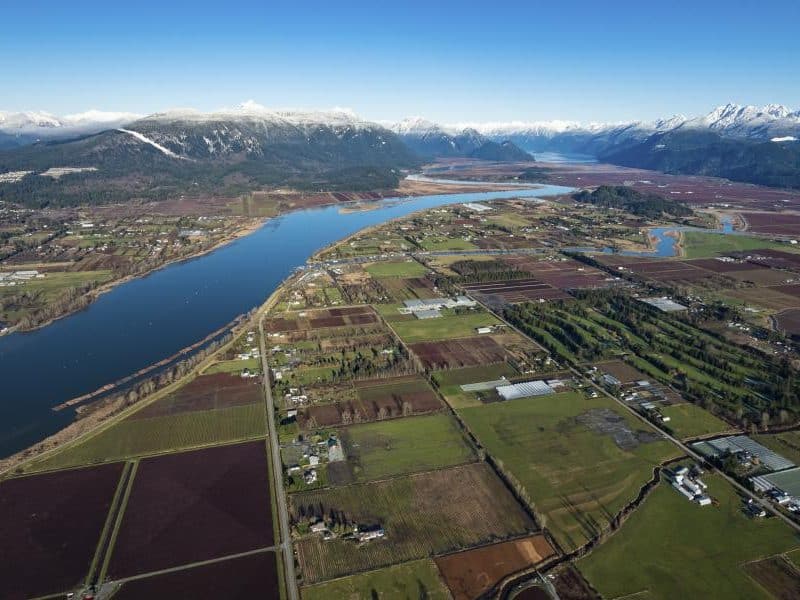
Pitt Meadows is particularly affected by the issue because roughly 78 percent of its land base – about 6,356 hectares – is within the ALR. The city also ranks sixth in B.C. for agricultural production.
During Holmes’ June presentation, Mayor Nicole MacDonald argued the large amount of protected farmland limits Pitt Meadows’ ability to diversify its tax base while the municipality remains responsible for maintaining infrastructure serving those lands.
Council ultimately pledged its support for the initiative, and MacDonald said this week that discussions with the province are continuing.
“We are connected to meet in September with Mayor Holmes and the Minister Popham, and further talk about the AMI,” MacDonald said, referring to B.C. Agriculture and Food Minister Lana Popham.
The city cautioned that its new figures are intended as a high-level estimate rather than a detailed accounting of every cost associated with agricultural lands.
Staff said the analysis will be shared with Summerland and could also be referenced by other local governments interested in the Agricultural Municipality Initiative.