‘Don’t put false targets for us’: Pitt Meadows council objects to provincial housing targets
Council raised a number of concerns about densifying, including that the city is largely in the agriculture land reserve and that it faces building restraints
This story has been amended to correct the spelling of Pitt Meadows CAO Mark Roberts.
Pitt Meadows council expressed ire after the province selected the municipality to be part of the next group of municipalities prioritized for housing targets.
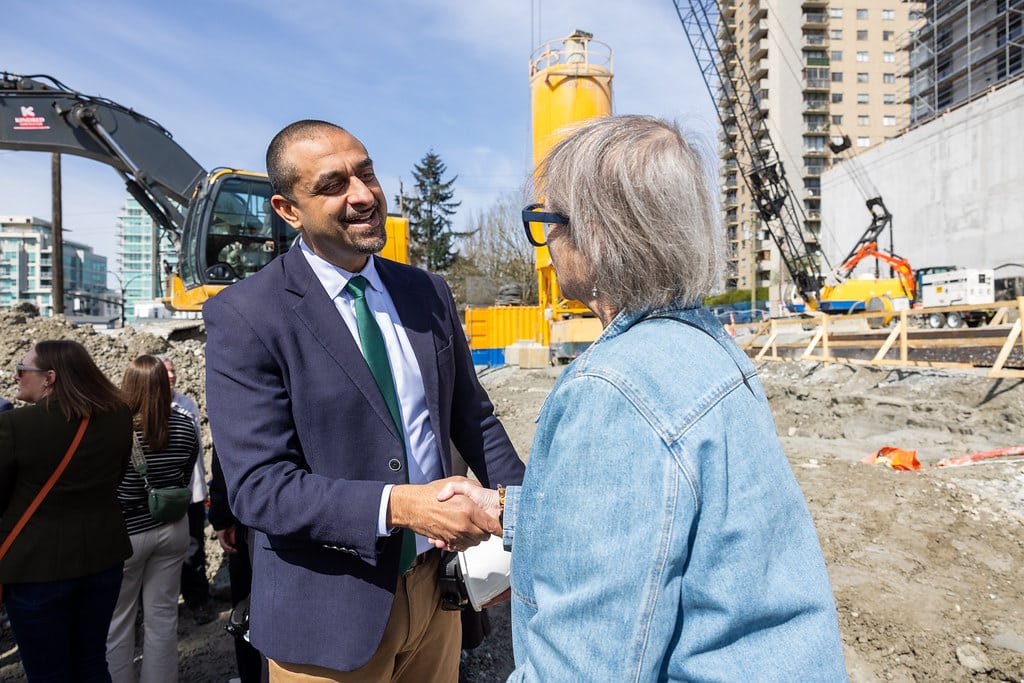
The city’s inclusion is part of the provincial push to increase housing supply, led by Ravi Kahlon, B.C.’s Minister of Housing and Municipal Affairs. In 2023, B.C. implemented the Housing Supply Act, giving it authority to set housing targets for municipalities.
“I was really shocked to see the City of Pitt Meadows included in this legislation,” said Coun. Mike Manion at a council meeting on Tuesday. “If we didn’t know the Minister … I would seriously ask the question, ‘Have you ever been to Pitt Meadows?’”
Pitt Meadows is one of 10 cities selected by the province and is in the fourth group of the province’s priority communities for housing. The housing targets for each community will be determined after consultation with each city, and will be at 75 per cent of its estimated housing need.
In Pitt Meadows, this could come to approximately 1,100 units built over the next five years, according to Patrick Ward, the city’s director of planning and development.
Mark Roberts, the chief administrative officer for Pitt Meadows, said the city faces development restrictions, like having a 10 storey limit due to flight path restrictions for the Pitt Meadows Regional Airport and flood elevation constraints.
“How do we manage to hit targets imposed when we have these kinds of restrictions upon the city?” he asked.
In a statement sent to The Ridge, Minister Kahlon said the province will work closely with Pitt Meadows “to ensure that targets are realistic, transparent and aligned with each community’s goals.”
Agriculture or housing?
Seventy eight per cent of Pitt Meadows lies in the Agriculture Land Reserve (ALR), which is land the province designates as having agriculture as its main use.
Coun. Alison Evans said she understands the need for densification and affordable housing, but she’s worried the provincially mandated housing target: “puts pressures on spaces we don’t have — and then we are going to be looking to the ALR.”
She emphasized that they need to protect the land to provide food for the Lower Mainland.
Mayor Nicole MacDonald agreed, adding that Pitt Meadows isn’t fighting growth or development. The city’s agricultural land contributes just 2.4 percent to their city budget — the city needs growth to support its taxation.
“We’re struggling to support our services and our infrastructure,” said MacDonald. “But let us grow food then. Let us be an agricultural community. Don’t put false targets for us.”
A spokesperson for B.C.’s Ministry of Housing and Municipal Affairs told The Ridge that the Housing Supply act “does not supersede the Agriculture Land Commission Act.”
Coun. Tracy Elke added that while Pitt Meadows is required to build more housing, they aren’t given funding to build the services needed to support a growing population — things like schools, parks, fire, police, or hospitals.
“We’re not a bunch of idiots here,” she said. “We know that we need housing, and we’ve been working on it, thank you very much, provincial government. But to come up with things like orders and directives and penalties for not creating more, and plunking things here and there, creating more gridlock.”
“This is not a ‘We don’t want it’. It’s a, ‘We’re doing our part where we can, in a thoughtful, progressive way,’” said Mayor MacDonald.
According to ministry’s spokesperson, the province has provided local governments with a number of resources to support them with densification. This includes a $1 billion fund for infrastructure projects (with $5 million to Pitt Meadows) and $51 million to help local governments meet density requirements (with over $240,000 to Pitt Meadows).