The West Coast Express turns 30
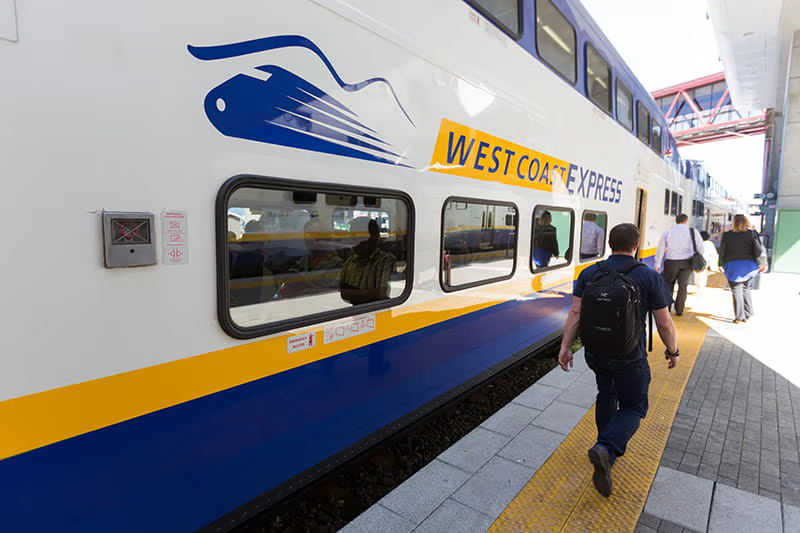
As TransLink is set to celebrate the 30th anniversary of the West Coast Express, one expert is taking stock on the way the transit line has reshaped the communities it serves.
The rail service started on Nov. 1 1995, in response to the region’s outward growth in cities like Maple Ridge and Pitt Meadows, said Stephan Nieweler, an independent consultant and researcher with expertise on urban planning and transportation.
The idea? To provide a public transportation option so suburban dwellers could get to their Vancouver jobs.
“It’s a very similar service [to what] it was on day one, so it hasn’t changed much, but it’s played an important role for the region,” said Nieweler.
The train runs from Mission to downtown Vancouver and only makes weekday trips, traveling westward in the morning and eastward in the afternoon and evenings — with stops at Port Haney, Maple Meadows and Pitt Meadows stations.
But as Metro Vancouver kept growing and ran out of non-agricultural land reserve land, the price of land skyrocketed in Metro Vancouver. With that, there’s been increased pressure to build higher density.
In nearby cities like Port Moody and Coquitlam, Nieweler says this has come to fruition, with a number of high density developments popping up (although he noted the SkyTrain influenced this, too).
“And now Maple Ridge, you’re hearing about towers,” he said. “And I think it’s a combination of the West Coast Express being there, but also now with what I call BRT [bus rapid transit] light.”
BRT is a bus service with its own dedicated lanes and train-like stations Maple Ridge is set to have a 22 kilometre line from Haney Place to Langley, which TransLink says will reduce travel time by over 40 per cent.
“Those kind of things push the higher density land use, because you’ve got reliable transit service through the whole day, which is something that West Coast Express doesn’t give you,” said Nieweler.
In North America, people don’t like walking more than 400 metres, or five minutes, to get to the nearest transit station, he explained — which is why governments are pushing for density around them.
Otherwise, people tend to resort to driving their cars, creating congestion on routes like Highway 7.
Meanwhile, the West Coast Express takes some cars off the road. According to TransLink, it has more than 2.6 million boardings each year and 3,700 unique customers every weekday.
“The West Coast Express is a key connector that supports regional growth by giving people the freedom to live farther out while still enjoying a reliable, comfortable commute downtown for work,” Anita Bathe, a TransLink spokesperson, explained in a statement sent to The Ridge.
Why hasn’t the WCE expanded since its inception?
Despite calls from advocates to increase West Coast Express services to better serve the regions eastern cities, TransLink faces a major hurdle in doing so: it does not own the track the train runs on, according to Bathe.
Rather, it is owned by Canadian Pacific Kansas City, which runs goods over the tracks as well.
“One of TransLink’s responsibilities is to prioritize goods movement through the region, and balancing passenger service with the movement of freight is vital. Right now, the line is near capacity for goods movement,” Bathe wrote.
TransLink is celebrating the anniversary by hosting an event from 10 a.m. to 3 p.m. at the West Coast Express Waterfront Station, where there will be prize giveaways, music, photo opportunities, and a meet and greet with staff. A special train service is running on Saturday to take people to the event — find out the time you can catch the train there and back here.