
‘Consistently growing numbers’: Ridge Meadows SAR reports high volume of rescue calls
Sean Tinney, a 30-year Maple Ridge resident, has explored trails around the city and Lower Mainland for decades. These are his tips to avoid getting lost in the woods this summer.
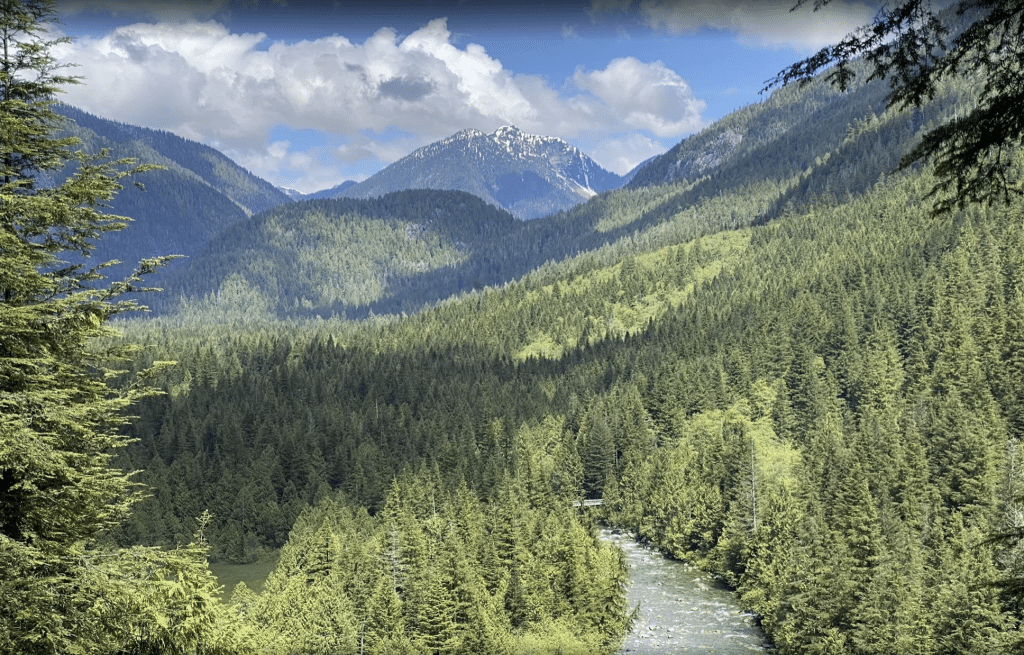
Whenever he is exploring the woods with his family, Sean Tinney is grateful for the people who are waiting for the phone to ring in case of an emergency.
Tinney, a health care worker who has lived in Maple Ridge for 30 years, grew up in a family that loved the outdoors. He hiked in the Interior of the province. He camped on the Oregon coast. He has criss-crossed the Lower Mainland, taking on day hikes from the coast to the Fraser Valley.
“I wanted to try more areas and continue to see other areas as they change over time,” he said. “I would call [myself] a ‘B.C. person’ that enjoys the beautiful areas that we have.”
Nearly one decade ago, Tinney was exploring ways to help the community when he noticed the Ridge Meadows Search and Rescue team, a non-profit organization that leads rescues in the Maple Ridge and Pitt Meadows area, were looking to recruit new members.
“I enjoy volunteering, I wanted to find a way to give back to the community, and search and rescue ticked all those boxes for me,” Tinney said.
Since he’s joined the Ridge Meadows team, interest in Golden Ears Provincial Park — the spot where most of their search and rescue attempts occur — has significantly risen.
The park set a new record for number of visitors in a month in 2020, and is widely known as “one of the most popular destinations in the Lower Mainland” for camping and day visitors, according to the province.
But that has also led to an increased number of rescue calls.
There were multiple rescue attempts in Golden Ears Park last summer and fall, including one search for a teenager who walked out of the park unscathed after being separated from her group for more than 50 hours.
Last year, Ridge Meadows Search and Rescue received 44 rescue calls in the area, Tinney said. In recent years, the group has gotten around 50 calls per season.
“The last couple of years, we’ve been seeing consistently growing numbers,” said Tinney, adding that there was a slight bump in demand following the COVID-19 pandemic.
“We’ve been close to the upper limit of what we have seen historically, and seen an increasing trend for our area.”
Ahead of another hiking and camping season that promises to bring thousands of people to the backcountry of Ridge Meadows, The Ridge sat down with Tinney to explain the spike, his interest in search and rescue and how residents can keep themselves safe this summer.
This interview has been edited for brevity and clarity.
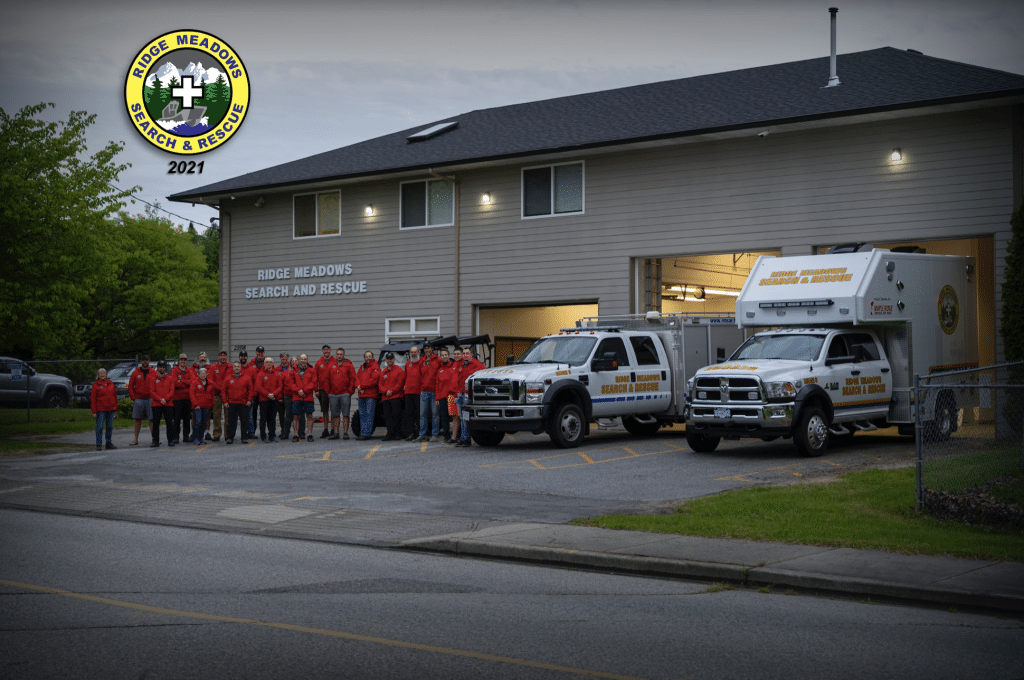
The Ridge: How did you get involved with Ridge Meadows Search and Rescue?
Tinney: I live in Maple Ridge, I’ve lived in Maple Ridge for over 30 years. I think of it as my home. My family lives there, I have kids there and they go to school there. So to me, Maple Ridge is my home. I enjoy the community and got into search and rescue for probably a variety of small reasons.
I wanted to expand my skill set of being outdoors. I really love the outdoors and the environment, and what Maple Ridge provides for us. I enjoy volunteering and wanted to find a way to give back to the community…
I’m a ground search and rescue responder, I’m a team leader certification, I’m also a team manager. I enjoy all components of responding and everything we do for all the calls we get in our area.
The Ridge: Is search and rescue your full-time job? Do you have another job on the side?
Tinney: This is completely 100 per cent volunteer. It’s something that I’m passionate about, but I would also call it a hobby that I enjoy doing outside of work hours. Working for a non-profit organization, it’s all volunteer, on-call hours. So we’re on call 24/7 and then we have expectations of how frequently or how many hours our members respond.
The Ridge: How many calls do you get in Ridge Meadows per year?
Tinney: The last couple of years, we’ve been seeing consistently growing numbers. It’s been quite steady. Since 2020, we’ve seen a continuous spike, as everywhere else in the province has. And we’re just seeing continual growth. Last year, we had a total of 44 calls, which is very close to our record. Previous years we were in and around 50.
The Ridge: Why do you think there has been an upward trend in recent years?
Tinney: There’s a couple reasons for it. One of the main reasons is Golden Ears Park is one of the busiest parks in the province, so it sees one of the highest number of visits per year.
And because it’s large, it has one of the largest campsites in the provinces. So a huge amount of people are looking to get outdoors and experience camping. They see that through historical [information], social media platforms, talking with friends and family…
We are also seeing continuing and expanding growth in the Lower Mainland, so as our population grows, we’ll see more people come to recreate in parks.
The Ridge: Obviously, there were a few rescues in Golden Ears last year. There were a lot of headlines on the teenager who was gone for about 50 hours. What makes Golden Ears a potentially treacherous place for hikers?
Tinney: One of the main challenges in Golden Ears is the lack of cell service. If people come out and recreate, they’ll often find that they don’t have access to their lifeline that they were relying on.
There’s three realms that result in a call for search and rescue: the ‘Three T’s.’ So this breaks down to trip planning, training and taking the essentials. A call for search and rescue will likely result in the failure of one of those three things.
There’s this national program called AdventureSmart, they put on a lot of education and talk about how to be prepared outdoors.
When we talk about trip planning, it [goes back to] how much research have they done into where they are going? How to get there? How to navigate it? Have they informed anyone of what their plan is? [AdventureSmart] has an app that you can fill out and share with your family and friends…
For training, have you done anything remotely similar to this? Like if I was to go off today and do Mount Everest, I would probably fail miserably because I haven’t trained for anything like that.
And then the third part is what we call taking the essentials. We have a list of 10 items that we want people to bring with them in case they get lost or hurt, or if the weather changes. Oftentimes, people that go up to the subalpine areas where there is lots of snow or terrain they aren’t prepared for, they run into trouble.
The Ridge: What areas or trails are more susceptible to people getting lost in the park?
Tinney: It takes some time to drive into the park. And once you’re in the park, you have to drive farther to the parking lot. And then once you’re in the lot, you can start your hike. Most of our calls result from longer trail hikes. So they’re often at higher elevations or farther away from where they have parked.
The Ridge: What may be something that your average outdoor enthusiast may not know about Golden Ears?
TInney: The amount of time. As I said, it takes a long time to drive and access [the trails]. So that impacts your daylight.
A lot of our calls happen in the afternoon or evening because the hike has taken someone longer than they anticipated. They don’t have flashlights, they’re getting cold and don’t have the appropriate clothing to keep warm overnight. Being aware of time and daylight is important.
The Ridge: Every rescue is different in terms of the situation. But if someone is going to reach out, how can they get help?
Tinney: Across the province it’s the same. The way to reach out to search and rescue is to call 911. They’ll gather information and determine whether to activate the RCMP or municipal police because someone is missing
Or if the call is for someone who has fallen and is injured, then they’ll activate ambulance services. They’ll put you through the dispatch and determine where the subject is located. If it’s in the park, whether it’s the police or ambulance, they will activate search and rescue.
Author

Related Articles

Maple Ridge approves $700,000 budget increase for Port Haney waterfront pathway project
Additional funding allows construction of Fraser River trail to move ahead after bids come in over budget