Maple Ridge planning director urges ‘bold action’ on housing amid market slowdown
Maple Ridge’s top planning official says municipalities need to keep pushing housing and infrastructure projects forward despite a slowing development market, arguing the city cannot afford to put preparations for future growth on hold.
James Stiver, Maple Ridge’s director of planning and building, said in an Oct. 1 release to the city’s website that local governments across B.C. are facing the challenge of encouraging more affordable housing at a time when developers are pulling back because of weaker market conditions.
Despite those headwinds, Stiver said Maple Ridge continues to grow, increasing pressure on the city to invest in infrastructure, services and amenities.
“We can’t afford to put these efforts on hold because of a downturn in the housing market,” Stiver said. “Local governments need to be innovative and work in collaboration with the development industry.”
Stiver pointed to the city’s recently launched Velocity Enhanced Development Approvals program as one way Maple Ridge is attempting to speed up projects considered important to the community.
The program gives eligible developments a dedicated senior city contact and an integrated approvals team to help applicants navigate processes such as rezoning, development permits, subdivisions and variances.
Projects that could qualify include affordable and transit-oriented housing as well as commercial and industrial developments expected to create jobs.
However, Stiver stressed the program does not eliminate required reviews or council oversight, nor does acceptance into Velocity guarantee a development will ultimately be approved.
The initiative is part of a wider effort by the city to streamline its development and permitting system, including the Certified Professional Program and expanded online permit applications.
According to the city, moving applications online has helped cut review times for new-home permits by approximately 75 per cent, with those permits now being processed in 10 weeks or less.
The push comes as Maple Ridge prepares for significant population growth.
The city estimates its population grew by 11 percent between 2021 and 2025 and could increase by as much as another 40 percent over the next 25 years.
Maple Ridge also came within 12 units of meeting its cumulative provincial housing target during the first two years of B.C.’s housing target program. The city recorded 1,272 net new units against a two-year target of 1,284 as of June 30.
The province has ordered Maple Ridge to add a total of 3,954 net new housing units over five years, ending June 30, 2029.
Stiver said the city is concentrating on portions of the housing system that municipal government can directly influence, including zoning, permitting, renter protections and planning for infrastructure.
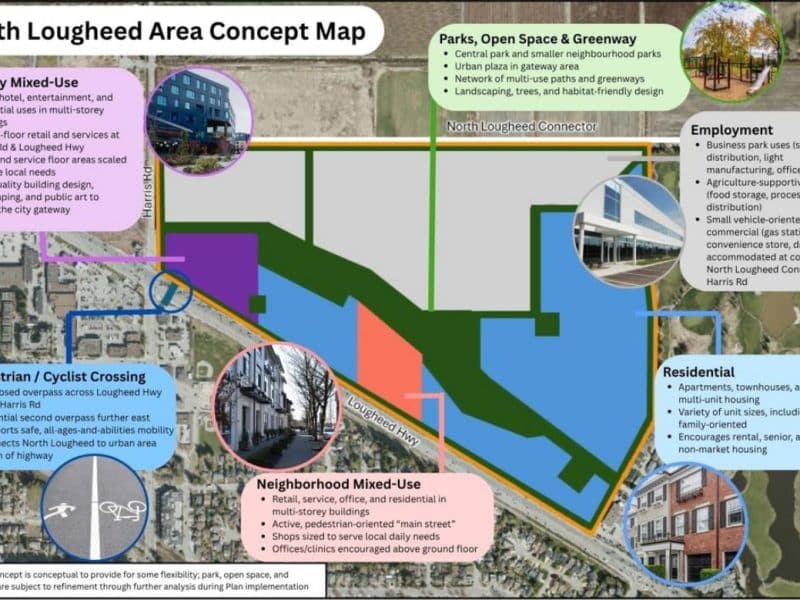
Among the city’s recent housing measures are four proposed medium- and high-density zones covering key growth areas, including transit-oriented areas, the Town Centre and Lougheed Transit Corridor.
Those zones are intended to accommodate apartment and mixed-use development near transit, businesses, services and employment while introducing updated standards covering building design, amenities, commercial space and childcare.
Maple Ridge has also adopted a Tenant Protection Bylaw and made changes to its tenant relocation framework as it prepares for redevelopment that could displace existing renters.
Stiver argued housing construction must be planned alongside employment and infrastructure growth.
He pointed to the North 256 Street Industrial Area Plan, which council adopted earlier this year, as part of an effort to expand the city’s employment lands, attract businesses and increase the non-residential tax base.
Infrastructure spending will also play a significant role.
Maple Ridge’s 2026-2030 Capital Plan contains nearly $432 million in planned investments in transportation, utilities, public safety and community facilities.
Major projects identified by Stiver include extending Abernethy Way to serve approximately 500 acres of industrial lands around North 256 Street and planning for a new 240 Street bridge connection to Silver Valley.
The city is also supporting TransLink projects including the expansion of Golden Ears Way and the planned bus rapid transit route between Maple Ridge and Langley.
But Stiver said municipalities cannot accommodate growth on their own, arguing continued provincial and federal investment will be needed for schools, health care, childcare and infrastructure that fall partly or entirely outside municipal responsibilities.
“The challenge here in Maple Ridge is to continue aligning housing, infrastructure, amenities, and employment growth so that our city remains a complete, livable, and connected community for both current and future residents,” he said.