Ultimate is coming to Maple Ridge. Will it lead to a Frisbee boom?
The popularity of ultimate has spread to other parts of the province, but as Maple Ridge prepares to host the Summer Games, youth participation still lags compared to other cities

The first time Brian Gisel played a game of ultimate, he never touched the disc.
It was a summer day in 1992, and Gisel, 23 at the time, had just finished university. Earlier that year, on a whim, he joined an adult ultimate Frisbee league based in Vancouver with a friend from school.
For months before the competitive season began, the two practised with the team — perfecting their forehand tosses, backhand throws and leaps in the air.
Gisel, who also played hockey growing up, loved that ultimate was a self-officiated sport, meaning the players called their own fouls and rules were openly debated on the field. That aspect, he says, fostered a group of people who were always keen to invite newcomers like him to the sport.
“Its competitive and it’s a great workout, but the respect you have for other players and the spirit of the game, a self-officiated sport, is a great thing,” Gisel said.
Although Gisel never touched the Frisbee in his team’s first game, the next time they stepped on the field, his team captain told him to take the pull, a play similar to the opening kickoff in American football where the opposing team tosses the Frisbee to the other team to start the game.
“I very much remember that because the way it happened,” said Gisel, now the general manager of the BC Ultimate Society. “The rest was history.”
Ahead of the BC Summer Games in Maple Ridge later this month, Gisel is hoping to hand out similar assists to the next generation of young people interested in competitive Frisbee.
This year, ultimate is slated to be competed for the first time in the 46-year history of the amateur provincial tournament. It’s also the first time the sport will be played in any provincial games in Canada.
Dozens of boys and girls from five of the tournament’s eight zones — Vancouver Coastal, Fraser River, Kootenays, Thompson-Okanagan and Vancouver Island — will travel to Maple Ridge to play in the four-day event beginning July 18.
It’s being pegged by ultimate advocates as a chance to grow the popularity of competitive frisbee for kids between the ages of 12 to 15, a demographic where the sport lags in popularity in some areas of B.C.
“We know in high schools, the younger you can get kids involved in your sport, the more it helps development across the board,” Gisel said.
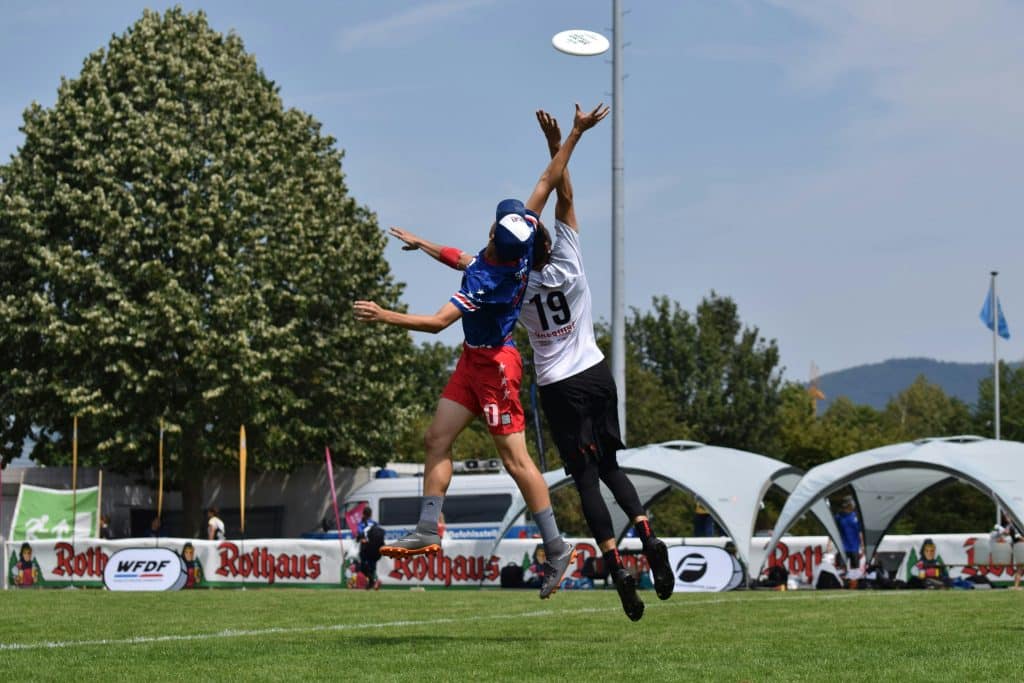
Ultimate has long been known as a popular sport on college campuses, with 18,000 student-athletes competing on more than 800 teams in the U.S.
North of the border, it became an official sport recognized by BC School Sports in 2019 and now features its own annual provincial tournament every May. And many grassroots organizations in the Okanagan and Vancouver Island are attempting to push the popularity of the sport even farther across B.C.
But it’s popularity is still relatively centralized in Vancouver and its surrounding suburbs.
A Fraser Valley-based team for the BC Summer Games — a zone which includes the host city Maple Ridge — folded in the weeks before the tournament due to a lack of available players.
“I didn’t find it too surprising,” said Jason Kimoto, a coordinator of the zone.
There are only a handful of schools in that area that play ultimate, says Kimoto, and many of those students don’t fit into the age brackets available for the BC Summer Games. For example, Kimoto, who coaches ultimate in the area, said roughly three out of 30 players on one of his high school teams were eligible for the roster.
Despite the roster setback, he said he’s optimistic the BC Summer Games will increase visibility for the sport, which he says is still commonly known as something that is played recreationally.
“In terms of Maple Ridge, Langley, Abbotsford, something I know for a lot of kids is the only time they see it is in P.E. class,” Kimoto said. “They never see the higher end of play.”
At that age, he said students who are keen to play competitive sports may be more likely to play more established sports such as track and field, soccer or basketball. But if more people pick up ultimate at younger ages, they may become more comfortable playing later in high school.
“The other issue is that because this is something you do for two, three weeks in P.E., they don’t feel confident in their ability of play,” Kimoto said. “They have that fear of, ‘I’m not going to do this perfectly,’ because a lot of other sports they’ll start playing when they’re super young.”
The story was not the same a little closer to Vancouver.
About 60 kids attended a tryout for the Fraser River BC Summer Games team, which encompasses Burnaby, the Tri-Cities and Surrey among other cities, said Chris Wakelin, a co-coordinator of the zone. A dozen kids, six boys and six girls, were selected for the roster.
Recruiting for the Fraser River BC Summer Games team began at regional tournament near the end of the high school season. Wakelin marketed the team as the ‘first of its kind’ experience for young athletes.
“I was playing on them, ‘You guys are pioneers in this and if you guys enjoy it, maybe other people in grades seven, eight, nine they’ll want to do this,’” Wakelin said.
Although its inclusion into the BC Summer Games is positive for changing the perception of ultimate, Kimoto said he believes the sport will grow most through word-of-mouth.
“I don’t think you’re going to find that kid who’s never played before that’s going to make a team for the BC Summer Games,” Kimoto said. “Maybe it’s someone who makes the team and has a friend who they talk to about it with and they realize it’s not just some game you play on the weekend.”
As the sport reaches new heights locally, Gisel has his eyes set on even bigger goals. He said he hopes other provincial sport organizations follow B.C.’s lead and include ultimate in their local youth championships.
“Having our sport connected to a multi-sport event, not just an ultimate event, was something I was happy to get,” he said. “Having the sport in multiple provincial games is the way to get into the Canada Summer Games.”
A generation of people who picked up ultimate in Vancouver in the early 1990s, like Gisel, have also moved to different parts other province — a concept that he, Wakelin and Kimoto all said explains why the sport is being taken more seriously and being included into the BC Summer Games and BC School Sports.
Perhaps that notion is best illustrated in the Kootenays, Gisel says.
Most of that zone’s roster is made up from children from Grand Forks, a city where a group of teachers moved roughly one decade ago and increased participation in ultimate.
“They got Frisbees and young people and it just ballooned up into this great thing,” Gisel said. “It could happen in every town and city in B.C., it just takes that spark.”
Author