
Agriculture survey raises questions about irrigation, road conditions
Some Pitt Meadows councillors say that irrigation and traffic concerns aren’t adequate represented in the survey
Some Pitt Meadows councillors raised concern with a couple of the findings from the city’s first agriculture survey, completed earlier this year.
The city sent the survey as a way to monitor its implementation of its Agricultural Viability Strategy, which it approved in 2023. They intend to send the survey out every year or two.
The city sent the survey to 425 residents in the agriculture land reserve and received 46 responses (a little more than 10 per cent).
Of those respondents, 43.5 per cent said they had some irrigation challenges.
Irrigation needs depend on what’s farmed, said Michelle Baski, Pitt Meadows manager of agriculture and environment, in a presentation to council on Tuesday.
While the survey responses don’t indicate water is a big challenge, she said that they know farms that require a lot of water have challenges and are worried about drought, she explained.
Coun. Mike Manion said this finding was “somewhat disturbing.”
“The fact that 57 per cent responded that water wasn’t an issue is concerning for me, and it leads to more questions than anything else,” he said.
It might be because it is a “wet year” this year, so irrigation isn’t currently a problem, he suggested, adding that he thinks that surveys should ask if farmers have ever had irrigation issues, rather than solely for the current year.
When the city publishes a report like this, “we have to have caveats,” Coun. Manion said.
“When the urban population — which is far greater than the agricultural population — looks at why we might potentially spend money on an irrigation study, and they look at this report, they would say, ‘Why are you spending money?’ But it isn’t telling the whole story,” he said.
Mark Roberts, Pitt Meadows chief administrative officer, noted that they had only received 10 per cent response rate.
“Which isn’t really a large representative sample, in my opinion,” he said. “I think another caution to the survey results is the fact that I’m not sure that we got a significant enough response from the survey . . . to make some assertions from the survey.”
Samantha Maki, director of engineering and operations, added that this report doesn’t change any of their current plans.
“But it will help comparison moving forward as we do this again and again and get more feedback, are things getting better? Are they getting worse?”
She said that the city understands that statistics: “can almost be twisted in a lot of different ways . . . depending on how you analyze it.”
Traffic
The survey results suggested a 50-50 split of opinions on road conditions, said Basi. Half responded that road conditions were adequate, and the other half said they weren’t.
“Most of the concerns were around road width and conflicts with other users, so those that are driving at high speeds and disregarding slow moving farm vehicles,” she said.
Coun. Gwen O’Connell also flagged traffic as an issue, specifically on Old Dewdney Trunk Road.
“It just appalls me — and I use that road a lot . . . it makes me crazy when I watch people speeding and passing. I’m amazed that there’s not more accidents on there,” she said.
The agriculture viability strategy notes that conflicts between farm vehicles and increased traffic on the local road system is one of the key issues the agriculture community had raised.
“So if we’re going to protect this much of the farmland in Pitt meadows, and it’s costing us a lot of money to protect farmland, let’s protect it. Let’s help the farmers out,” O’Connell said.
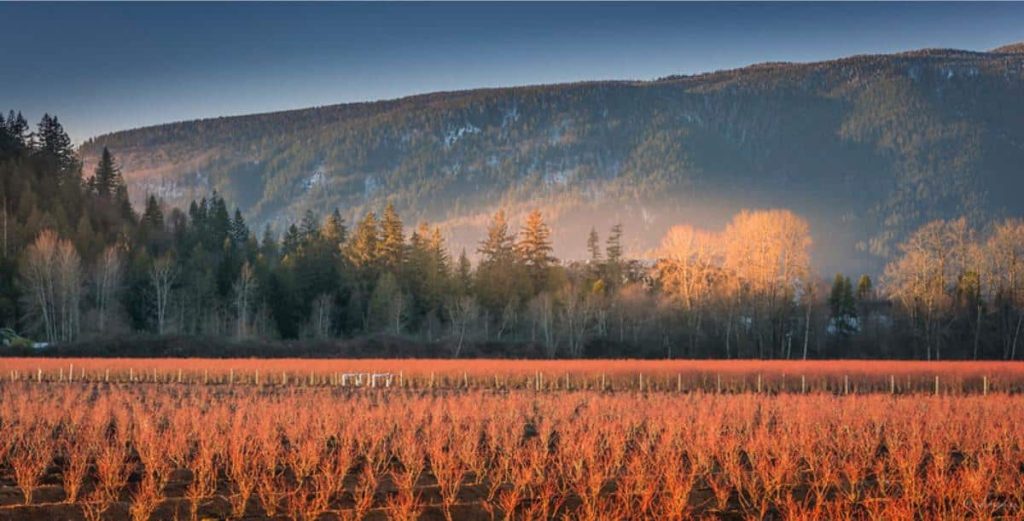
Seventy eight per cent of Pitt Meadows is in the agriculture land reserve. The most common types of farming are blueberries, cranberries, hay, and nurseries.
Related Articles


Pitt Meadows pushes back on province’s housing targets
Pitt Meadows says it wants the province to come up with a more “realistic” number

The Last Picture Show: Final day at Pitt Meadows theatre filled with sadness
Our writer went to the final showing at Hollywood 3 Cinemas – 35 years after he covered the theatre’s opening day
