Pitt Meadows moves ahead with new tree bylaw, 30 percent canopy target
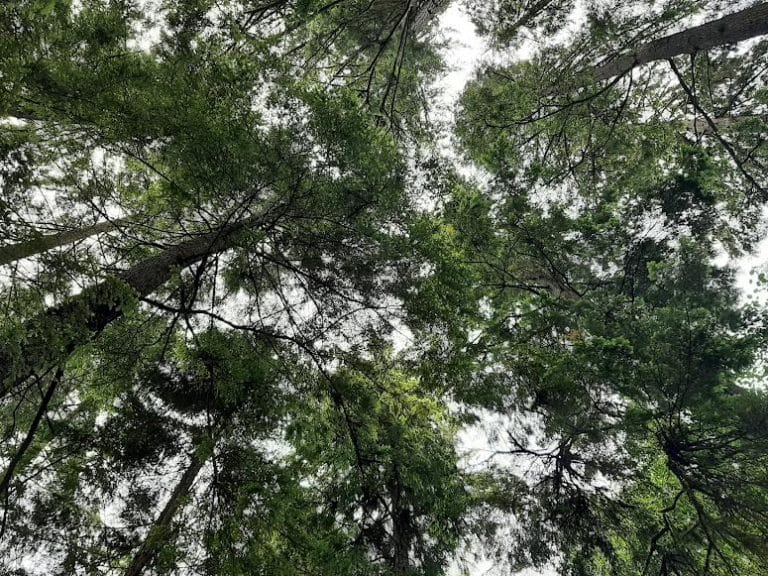
Pitt Meadows is moving ahead with a permanent tree management bylaw that will set a 30 percent canopy target for new development and require more replacement trees when larger trees are removed.
Council unanimously gave the new tree management bylaw first three readings on Sept. 1, replacing an interim set of rules that has been in place since March while the city gathered feedback from residents.
“It’s been a long time coming and I’m just so excited to see it go through,” said. Coun. Alison Evans.
The new rules are intended to strengthen protections for large and significant trees while still allowing property owners to remove and manage trees on their land.
Under the proposed bylaw, trees with a trunk diameter greater than 70 centimetres would be considered significant, along with trees recognized for heritage, ecological or landmark value. Removing one would require an arborist assessment and justification acceptable to the city.
The bylaw also introduces a 30 percent tree canopy target for development, redevelopment and residential building projects that increase a property’s existing floor area by more than 25 percent. Projects in the Agricultural Land Reserve would be excluded from that target.
Replacement requirements would depend on both the size of a tree and why it is being removed.
For regular property maintenance, removing a tree between 20 and 40 centimetres in diameter would require one replacement tree. Trees between 41 and 70 centimetres would require two replacements, while significant trees larger than 70 centimetres would require three.
Those requirements would be waived if a property still has more than 30 per cent canopy coverage after the tree is removed.
Development projects would face tougher requirements, with two replacement trees required for trees between 20 and 40 centimetres, four for trees between 41 and 70 centimetres, and six for significant trees larger than 70 centimetres.
Developers and property owners would also have the option of paying cash in lieu where permitted. The amounts would be $250 for a small-canopy replacement tree, $500 for a medium-canopy tree and $1,000 for a large-canopy tree. Development projects that fail to meet the 30 per cent canopy target would pay double those amounts for the trees needed to make up the shortfall.
The rules maintain exemptions for dead or hazardous trees and trees removed by the city. Agricultural activities in the ALR would also continue to be exempt, although tree protections would apply in areas covered by provincial riparian protection requirements.
Coun. Mike Manion said he appreciated the inclusion of exemptions for dead trees and bushes, stating that it was important that the city take care of those issues.
The permanent bylaw follows roughly five months of experience with Pitt Meadows’ interim tree rules, which council adopted March 3.
During that period, the city processed tree removal permits, incorporated tree protection plans and arborist oversight into development applications and dealt with compliance issues. Staff said that experience helped identify changes needed for the permanent bylaw.
The city also conducted a public survey between March 25 and April 26 and held an open house in April. Fifty people completed the survey, with staff reporting general support for stronger tree protections and increasing Pitt Meadows’ tree canopy while preserving reasonable options for landowners to manage their properties.
Feedback included support for stronger protection of large trees, replacement requirements based on tree size and greater long-term tree canopy through development.
Enforcement would initially continue to emphasize education and voluntary compliance, although fines under the city’s bylaw notice system would range from $250 to $500 per offence.
Staff expect the program can be managed using existing employees and a system that relies on qualified professionals to prepare arborist assessments and reports. The city plans to monitor permits, enforcement, replacement planting and changes to the urban tree canopy, with staff expected to report back to council after about two years.
Pitt Meadows’ canopy coverage within its urban containment boundary decreased from 20 percent in 2014 to 17 percent in 2020, according to historical ortho-imagery analysis.