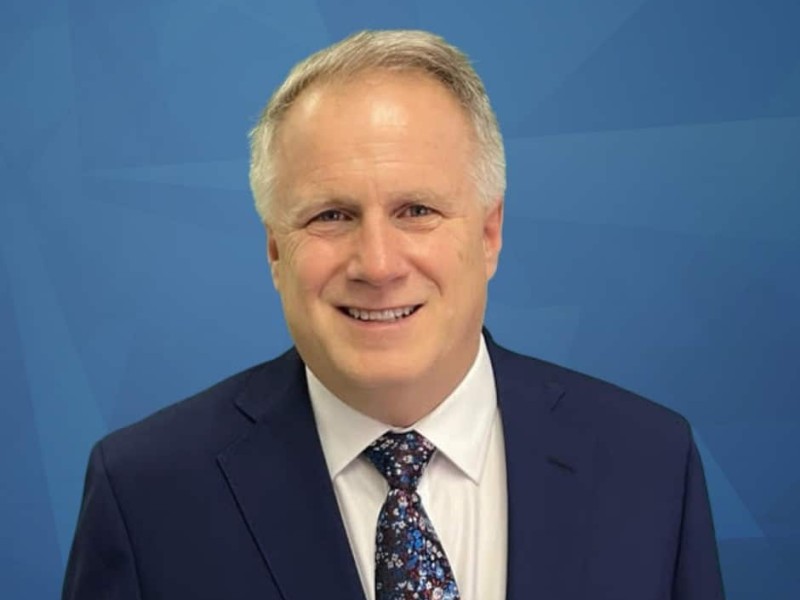
The Ridge interviews Daniel Heydenrych, NDP candidate for Pitt Meadows-Maple Ridge
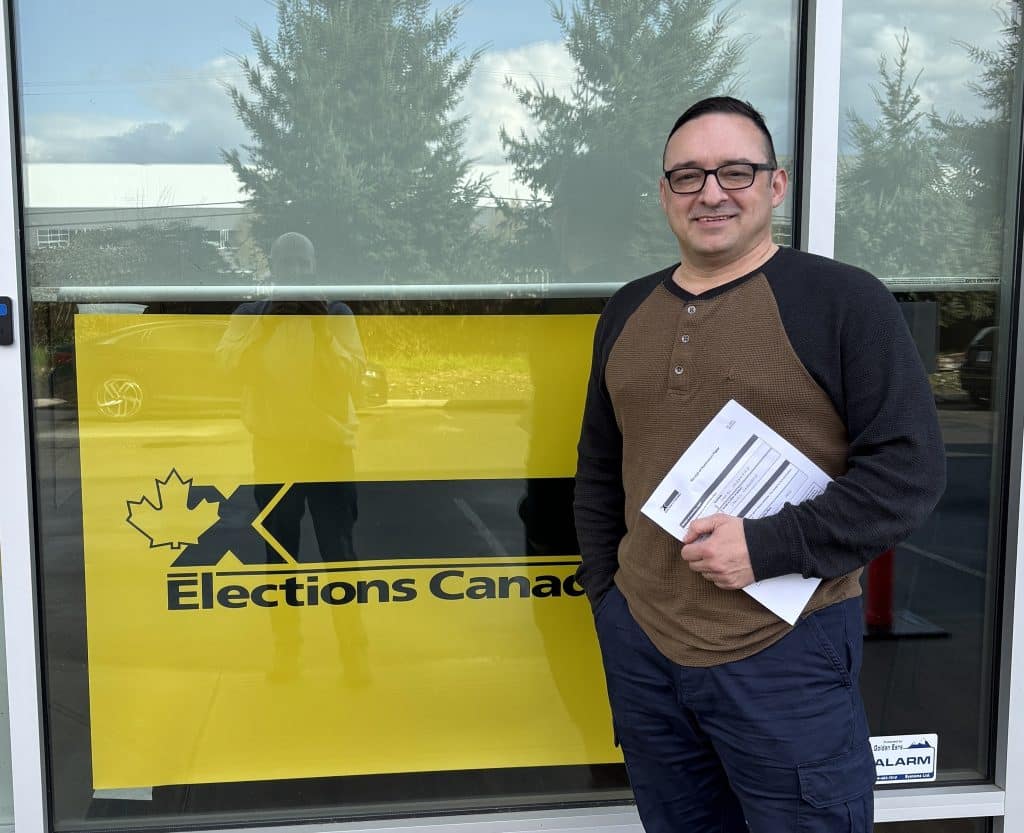
The Ridge interviewed Daniel Heydenrych, who is running for the NDP in Pitt Meadows-Maple Ridge.
This interview has been edited for length and clarity.
The Ridge: What’s your background and what brought you into politics?
Daniel Heydenrych: I grew up under the apartheid period in South Africa right up until the end of my high school. I finished high school in ’94. But also in ’94 I volunteered in the reserves to actually serve during the 1994 elections that got Mandela elected because there was a big concern about right wing extremists trying to stop the transfer of power and stop the free and fair elections. Because there was so much hate and division and vile rhetoric that I grew up with. And as you get older, you realize just how toxic it is.
I was in the South African forces for a few years. But after that, I went and I joined the British Army. And while with the British army, I served in the United Nations on a peacekeeping mission. And I also served in Iraq on a civilian and military reconstruction team, where we did reconstruction and development. Basically the military version of an NGO, humanitarian relief is what I did. And then subsequently leaving the Army—or the full time army, because I’m still in the reserves—I worked all over the world with a variety of reconstruction and development NGOs, election observers around the world. And did all sorts of stuff where we delivered primary health care, gender based violence care and mental health care post conflict situations. HIV AIDS treatment, or water sanitation, health treatment. And then even protecting election observers in Afghanistan through several rounds of elections.
But most of what I’ve done, either in the military or privately, has been some form of humanitarian or relief or development based mindset behind why I do what I do. And then most of—I moved to B.C., I moved to Canada in 2014 and most of the time since I’ve been here, except for the first couple years, you work whatever you can, when you’re new.
But for the last nearly eight years, I worked for a minority community group heavily targeted by prejudice and bigotry and hatred, and I was the director of community security for the Jewish Federation of Greater Vancouver. So again, it just goes back to humanitarian care for the vulnerable.
But why I got into this, into politics this time around, for this election, was because I saw what has been happening in America is obviously being a huge spike in kind of really divisive and hateful rhetoric, and people are latching on to that because through, you know, economic crisis and cost of living crisis, it’s easy to manipulate people into hating the other and to blame someone else for the problems.
And you’re seeing that happen here in Canada. You’re seeing some of the same terminology, some of the same imagery, some of the same rhetoric creeping in, and it is definitely starting to take hold. I mean, if you look at the convoy, there were people with Confederate flags and swastikas at the convoy in Ottawa, right? That has no place in Canada. It really doesn’t. So that sort of thing really kind of irked me, because I’m an immigrant. I’ve come here to make this my home, because it is so open and inviting and welcoming and such a great place to be. And I don’t want to see it turn into something where myself and my wife could potentially be targeted for being–I’m an immigrant, she’s Indigenous Mexican. You don’t want to go down the slippery slope analogy, but the minute you start allowing some of this crazy right wing stuff, the more and more it starts to creep in. And America right now is just a very good case study of that happening. I’m just trying to do my bit where I can and how I can to stop that happening here.
The Ridge: And so in your riding, the Pitt Meadows-Maple Ridge riding, from what I’ve seen in the polls, it looks like it’s a toss up between the liberals and the conservatives. So what’s your pitch to vote for you and the NDP instead?
Daniel Heydenrych: Well, I mean, the NDP pitch, it’s pretty good. The fact that if you look at the other parties voting histories, if you look at the stance on various issues when it comes to affordable healthcare, when it comes to dental care, when it comes to PharmaCare, when it comes to universal healthcare, $10 day child care, anti scab legislation, the list goes on and on, all these programs that are designed for support and help and protecting those that are most in need, those that are struggling the most in the current cost of living crisis. They are always put forward by the NDP. They are always championed by the NDP. And I know people complain about the supply and confidence agreement, but the reason we got so much of this stuff was because we held the Liberals accountable. They talk a good game, but they don’t deliver.
And so the only way to get things delivered is to have enough NDP representation in Parliament, right? The NDP is the party of union, of typically the working class blue collar folks. And while there is a push against that right now, because you are in such uncertain and bizarre times, that fact doesn’t change, the NDP is the party that gets you those social programs that actually help you on a day to day, down at your level, not some nebulous corporate nonsense. And yes, I understand that the polls, for what they are—polls are just a snapshot of a few people, and typically very—I’m not going to name them, but the various polling, they’re aggregates of a variety of things, as well as national polling. So they’re not always accurate.
The Ridge: What’s your pitch for people to vote for you, specifically, in the Pitt Meadows- Maple Ridge riding?
Daniel Heydenrych: For me specifically, and we touched on this in a bit of my background, I have extensive international relations experience. I’ve worked all over the world dealing with a variety of issues, such as the ones you’re facing here on a different level, but housing, healthcare, education. These are all things that are quite universal. And I worked on programs with NGOs, with aid agencies, with government departments to try and make sure that these are delivered. So I’m used to dealing with people that are aggressive to the programs coming in, be it religious or political reasons. I’m used to dealing with people from leadership at village elder level all the way up to government level, government department level. It’s my international relations experience working with a variety of cultures and ethnicities and religions.
And a lot of that is grounded by the fact that I do also have a degree in International Relations and Security Studies, as well as a Master’s in International Security Studies. So this isn’t just me running around the world, doing stuff. I also have the theory behind the practical experience, and I would just say that my international experience, my dealing with international relations policies, dealing with international politicians, really sets up a good brain work for how to move forward and where you need to work collaboratively with certain political parties or political groups or political people, or will you need to be able to stand up and counter whatever they’re doing if it’s wrong and champion a better way forward.
The Ridge: If elected, what would you focus on to support the people in Maple Ridge and Pitt Meadows?
Daniel Heydenrych: Things like the $10 a day childcare. It’s come in, but it needs to be protected and expanded, right? And part of that expansion means making sure we have enough people, enough teachers, enough care [providers] to look after the kids, enough spaces, enough facilities. So funding those appropriately.
Healthcare, making sure that we put in place a very robust Healthcare Act to stop—because I know that healthcare is done at the provincial level, but it has to be funded at the macro scale, from the federal side, and it has to also be regulated to a degree to make sure that we don’t have defunding to the point where parties can claim, ‘Well, public healthcare isn’t working, and now we have to privatize.’ We have to protect our universal health care from privatization. Universal health care should be a human right. It shouldn’t be put up for sale to the highest bidder. And we see that in America, the bankruptcy through medical costs is one of the highest causes of bankruptcy in America. We can’t get to the point in Canada where you have to pay to get care.
Affordable housing is another issue. Most people are being priced out of their own communities. Young families are struggling to be able to live where they grew up. Prices are skyrocketing. I use this example when I talk to folks in the neighbourhood where I live. When we bought it was a struggle to kind of move in here. And these are 70-year-old houses, you know, from the 1960s and they’ve doubled in price in the few years that we’ve been here. We wouldn’t be able to even buy in our own neighborhood now. And, it’s kind of unfortunate, so making sure that we need to do something along the lines of putting new buildings that are government funded, not for profit, that there’s affordable housing, that there is rent control housing built on public land, so that we’re trying to get people in, first time buyers, in at an affordable level, where they can actually live in their communities.
Those are some of the big ones. But I mean, there’s a lot. The problem is there’s a lot of issues, right? These are just some of the cost of living crises that encompass all of this. So food costs are going through the roof as well, and there’s a variety of issues around debt that are not sustaining the current American tariffs and trade war and potential annexation threats. So there’s a lot of things that are playing into all these issues. But you know, those are some of the bigger ones, you could go on forever talking about all of them.
The Ridge: I just had a follow up question about health care. You said to keep it working–I know a lot of people, as you’re probably aware—it doesn’t feel like it’s working, when there’s such long times to find a family doctor and things like that. So what are some of the solutions for that?
Daniel Heydenrych: Part of the solution for that is, and it ties back to immigration, is that we’ve talked about making sure that we have fast track applications and fast track recertification for people that are in trades and professions that we desperately need. There are plenty of people here in Canada that have come over and been able to get here for whatever reason, but then their medical licences, they’re doctors and nurses and nurse practitioners are not accepted here as on par with Canadians. And so you have really well trained people that aren’t in the job that they should be doing. So making sure we find a way to run programs to fast track them in to pick up the–if there are bits of training and education that they are missing that isn’t part of their curriculum, making sure we cover those and get people into these trades and professions quicker. Because right now, people are struggling for years and years and years, working minimum wage, low in jobs when they should be doctors and nurses and nurse practitioners and various other medical professionals.
The other thing is to try and find a way to improve the drive for people to get into these trades to begin with, right? And so that comes with a pan Canadian licence to allow people to work anywhere. So you don’t have to, like you’ve done all your training, you license in B.C., and then you have to go through another whole set of curriculum or training or licensing to go anywhere else. And that way, it’ll help people to go potentially where they’re needed more.
But one of the things we do need to do is to make sure that we fund everything in the right way. And so you can make promises about we want to have more doctors and nurses, but if we can’t fund the education facilities to take on these students, to train them properly, for them to have a place to go that there’s enough hospitals that are running in our adequately staff and adequately funded for them to go into to start with? Well, none of this can work. So again, it comes down to, yes, provincial is the one that handles health care, but we have to take definitive steps from the federal level to ensure we protect that and reinforce that and make sure that it’s funded.
The Ridge: And you’ve alluded to the uncertainty at this time with US President Donald Trump’s trade war on Canada and threats to sovereignty. Why do you think you’re the best person for the job in the Maple Ridge Pitt Meadows riding at this time, in this context?
Daniel Heydenrych: And again, it goes back to what I said earlier on. I have extensive international experience dealing with people like this, people that are bullies. They’re trying to push a harmful agenda on vulnerable people, and using their position of power or strength or money that they have or military might to try and make people comply with something that is against their best interest. I’ve done this pretty much my whole life, and it’s not me standing alone. You have support, you have teams, you have other members of your military or your NGO or government agencies that help you with it, obviously, but you’re a part of standing up to this kind of aggression. And I’ve done this. I’ve done this my whole life. I won’t stop doing it. I’ll always champion marginalized and vulnerable people, and if something is going wrong, like now, where they are pushing this harmful trade war against us. It’s not about complying with them. It’s about finding ways to move forward.
So we have other partners that we can switch to. We have the EU, there’s other trading blocks that we can switch manufacturing or trade deals. Yes, they’re right on that border. Yes, they were our biggest trading partner. It doesn’t have to be that way. We can stand strong without buckling under this American pressure. There are many things that we can do, but again, it’s working collaboratively and making sure that we are targeting the right things.
Offshore tax havens, we are losing billions and billions a year to corporations and individuals that are not paying into the system. Which could be helping us, which could be offsetting these costs, which could be helping healthcare, the cost of living crisis, housing. There’s money that we are not getting that we should be getting, and we need to close the loopholes, because people that aren’t paying into the system, that are just kind of leaching, they need to be held accountable. We are losing billions to oil and gas, but we subsidize oil and gas industries, and yet, every year, the same industries turn massive profits and pay their executives humongous bonuses. Why are we still giving them subsidies and handouts?
We’re losing money constantly to big corporations, to the rich and wealthy, and this is money that really should be going back into social programs to help people. And this trade war just highlights how much we are struggling because we are losing so much money to tax havens and corporate shocks.
The Ridge: And how will you work with other parties to create policies if you were elected?
Daniel Heydenrych: If you’ve seen the last few years, nothing typically gets done unless the NDP is pushing people. So if we have a majority on either side, there’s no working with anyone, they’re going to do what they want, right? I mean, that’s just the reality. With a minority government, the only way to move forward is to collaborate, and is to cooperate if they want things to pass with the required numbers. So it’s always a give and take. Politics is compromise to a point, but it’s getting things that you need with a little bit of give and take.
For example, the dental care program. I’ll use that because expanding that dental care program is great, but running it through a private insurance health agency, it’s not–it should be run by the government, not by a private company. But it’s a step in the right direction. And so we’ve got it, there’s an expansion coming, and as you move forward, it should be slowly to transition to being fully under government control, so that we are not price gouged or held to the whims of private companies who are only there to make a profit and not really to focus on the helping the individual people. So compromise and collaboration is the name of the game. It’s a give and a take. And it just ensures that the bigger parties don’t just steamroll through with things that don’t benefit the average working person.
The Ridge: Those are all my questions, Daniel. But is there anything I didn’t ask that I should have, anything you want to add?
Daniel Heydenrych: Well, this is a huge, obviously, undertaking, right? And this is a very different election. I’m sure you know, the American influence and interference right now is really swinging people’s perspective. So there’s a lot of issues that we could be still talking about.
Immigration is a huge deal we could talk about, about how we really need to make sure that we can, making sure that immigration system brings in the people that we need, and it’s accountable to Canadians, but it’s also fair and dignified, so that we like the gaps where we need them, but we also don’t bring over someone who’s an engineer or a doctor and make them drive an Uber for six years until they can potentially be qualified and have to redo everything. That’s not fair, right? So fixing the immigration and make sure we are not overloading our system and getting people into the trade, education, healthcare, housing, so this all ties in together, right?
These are issues that we’re facing the housing, healthcare, the education, and there’s people that can do it, and we can plug these gaps. So immigration ties into all of this. Making sure that we expand public transit. Twenty per cent of our greenhouse gas emissions in Canada are through transport, through being stuck on the highway trying to get to work, driving for an hour, hour and a half, because we have to live so far away, because there’s no affordable housing. So putting in public transit that is heavily subsidized or even potentially free, this helps societies. This helps communities. It helps people live better lives, right? If you’re not spending three, four hours a day stuck in traffic, this is good for you, making sure that we prevent renovictions and price gouging in and foreign ownership of properties and taking them out of the market because they’re just using them as investment properties, not actually for renting or selling.
The Ridge: Climate change, just quickly, it’s not on people’s minds as much anymore, because, obviously, because of affordability issues and things like that. But how does the NDP propose to either adapt or mitigate for the changing climate?
Daniel Heydenrych: So one of the things making affordable housing, because to make affordable housing, people can potentially live closer to their families, can live closer to work, so they’re spending less time traveling, which means less greener gas emissions. So that’s one way, right? Making sure that we actually push forward on these affordable housing plans and public land, that is a huge thing. Again, it’s making sure that we are making polluters pay properly, right, and ending these various loopholes that they use to get away with polluting. And some of the some of the parties would prefer deregulation, and the industries will regulate itself. That mindset doesn’t work. They will pollute more. So we make sure we hold those accountable with stricter environmental regulations.
Another thing is that the NDP is looking to retrofit houses across Canada to make them more environmentally friendly. Some houses are really old, making sure that they have the seals on the windows. The windows are double blade, making sure that roofs are insulated using solar panels on various places to help generate electricity, make them a little bit more self sufficient. But the big thing is retrofitting houses. And you can do this for low income and low income people that are struggling. You can do this. We can pay for this ourselves and people that are low to medium income. We can do cheaper options for them, and again, heavily subsidized by the government. So if you make housing more affordable and you make it more eco friendly, some of the older housing this again, helps the environment. Every little bit helps towards protecting the environment. And it’s not a case of one big overarching policy that will fix everything. It’s about making sure all these small changes across what are done and implemented properly, because every little bit will help in the big picture.
Read the rest of the candidates interviews.
The Ridge interviews Marc Dalton, Conservative candidate and incumbent for Pitt Meadows-Maple Ridge
The Ridge interviews Angie Rowell, Liberal candidate for Pitt Meadows-Maple Ridge
The Ridge interviews Chris Lehner, PPC candidate for Pitt-Meadows- Maple Ridge
The Ridge interviews Peter Buddle, Rhino candidate for Pitt-Meadows-Maple Ridge
Related Articles
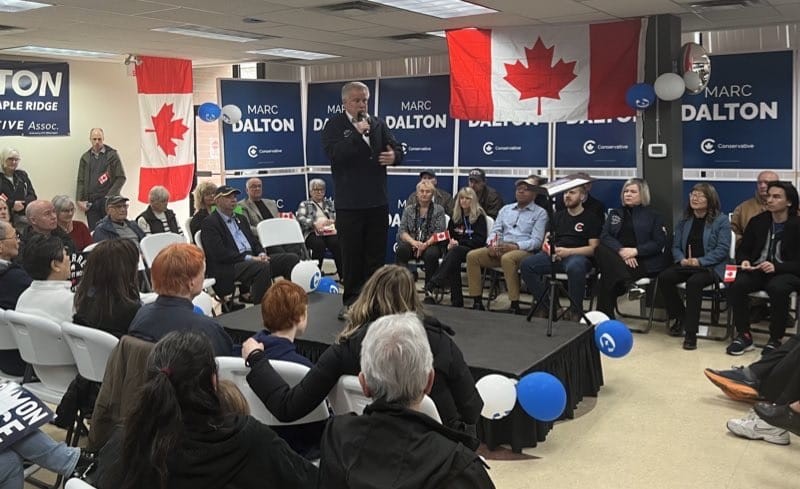
Dalton pledges to advocate on crime, addiction treatment, as he enters his third term as MP for Pitt Meadows-Maple Ridge
The longtime politician said he would focus on crime, treatment and recovery for addiction, and healthcare

Liberal Angie Rowell comes up just short in effort to flip Pitt Meadows-Maple Ridge
The first time politician said she ran because she wanted to help Mark Carney win