
Local food bank supports hundreds of new households in 2025
Cost of living is a major driver, says food bank manager

In the first eleven months of 2025, the Friends in Need Food Bank added 530 new households — just over 1,000 individuals — to their weekly roster.
“We’re seeing more working families that are coming in now that maybe in the past have had the ability to pay their rent and pay their bills, and they’re just unable to do that now,” said Evan Seal, the general manager of Friends in Need Food Bank.
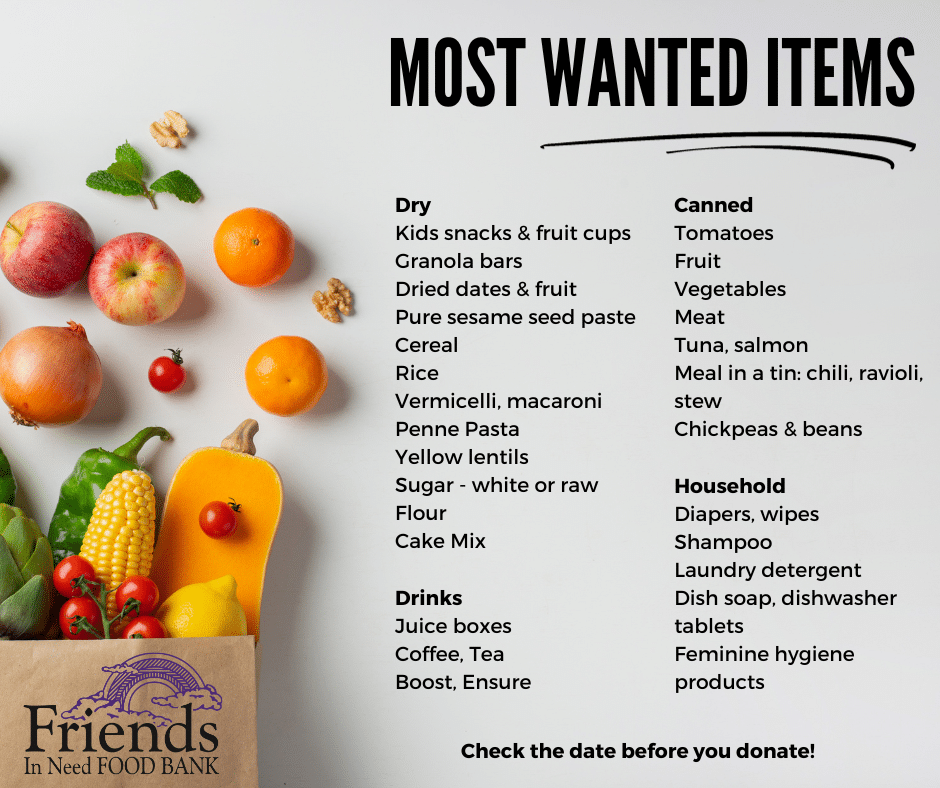
Meanwhile, cash and food donations have dropped.
“I just think it’s getting tougher for everyone, and they’re just hanging on to that food rather than being able to donate it easily as maybe they could have in the past,” Seal said.
He said that while there’s many factors that go into this increase, he thinks that cost of living is the biggest one, especially housing, even with rents slightly on the decline.
This is a trend across the province. According to a recent report from Food Banks B.C., an organization that represents more than 100 hunger relief agencies across B.C., there were record numbers of British Columbians turning to food banks in 2025.
“The charitable system that props up this essential service is being pushed closer to breaking point, with the demand growing at a time when donations of food and funds continue to drop,” writes Dan Huang-Taylor, Food Banks BC executive director, in the report.
In March of 2025, over 113,000 individuals used a B.C. food bank — nine per cent higher than the year before and 44 per cent higher than before the COVID-19 pandemic. Since January 2019, the cost of food in B.C. rose by 32 per cent.
Turning people away
Eleven per cent of BC food banks had to turn people away because they don’t have enough food, including Friends In Need.
With the drop in donations, Seal said they have to give out less food to each household, and that there are some days when they run out of food.
Not only is this hard on the people that use their services, but also for their volunteers.
“It’s tough when they’re short of food, and they can’t give out what they want, and they see the clients are struggling.”
How has the food bank stayed afloat?
Seal says they are constantly searching for and applying for grants to help fund their operations.
But what has kept them afloat in recent years is the perishable food recovery program they started in 2019.
The food bank partners with local grocery stores and collects the majority of their perishable foods that would otherwise be thrown out — things like vegetables, fruit, meat and eggs.
The store can’t sell this food because it is nearing its best by or expiry dates, but “it’s still really good product,” Seal said.
Friends In Need takes in 1.3 million pounds of food each year that is then sorted in their Perishable Food Recovery Facility. Over 70 per cent of it is repurposed and handed out to their clients and the remainder goes to farm animals or compost.
‘No off season for hunger’
While Seal says he notices a tendency for people to give more at Christmas time, he says that “there’s no off season for hunger. There’s no down time for us.”
Since he started working for Friends in Need about five years ago, he’s seen an upward trend in the number of households they serve. When he started, they were at about 600 per week, and now they’re at 950.
He came in during the COVID-19 pandemic, when many people were struggling with work layoffs.
“But that trend, I think — specifically, the cost of living, just it hasn’t slowed down at all. We’ve all been to the grocery store. We’ve all been shopping. We’ve all seen the rents in all the neighbourhoods around here, and they just continue to climb.”
Since 2019, there’s been a 200 per cent increase in the number of people with employment income using food banks across the province, according to the Food Banks BC Report.
“I often tell people, we’re all two or three paycheques away from being in the lineup here,” said Seal.
“If you don’t get paid for two or three weeks or four weeks, you’re going to be struggling. And you know it takes a spouse to get ill, or to have a family member pass away, or a child, or to be in an accident at work and being unable to work, and that can set you back. And you see a lot of that.”
Related Articles


How a Maple Ridge resident started a local clean-up crew
The first cleanup is this coming Sunday

How fixing broken things is creating community connection
The Ridge-Meadows Repair Cafe volunteers have fixed thousands of items since it began
