Council washes their hands of construction waste treatment project
Nine acre soil washing facility unanimously rejected by Pitt Meadows council
Pitt Meadows is pumping the brakes on a proposed soil washing facility located on agricultural land.
Council unanimously voted against the application Tuesday evening, fearing the building would place additional strain on the city’s water system and bring high volumes of traffic to rural roads.
“This council is very much committed to our agricultural lands and this does not have a nice complement and actually proceeds with risk,” said Mayor Nicole MacDonald.
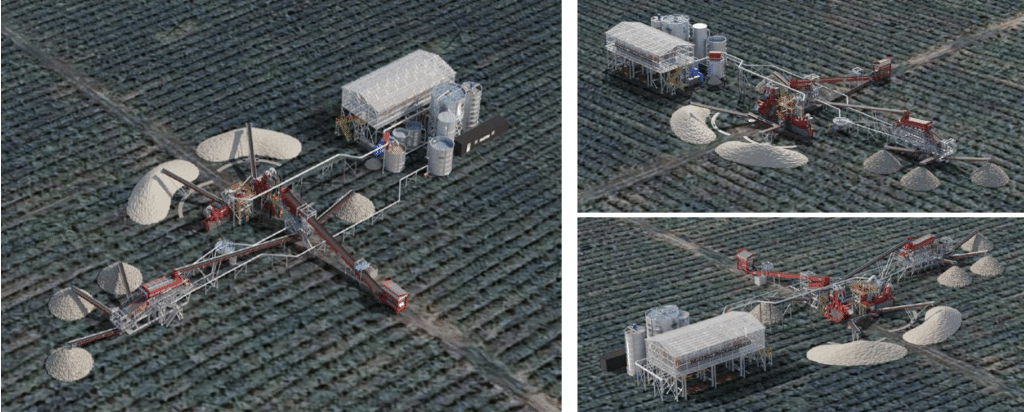
The facility would have accepted excavated soil from construction sites, using mechanical and chemical processing to extract contaminants and separate them from sand, soil, and gravel aggregates.
Those recycled materials would then have been re-sold to other construction projects.
But the Pitt Meadows project would have required provincial approval to use water from the Sturgeon Slough due to a lack of resources available within the city, which prevented many councillors from giving it the go-ahead.
“Removing water from the Sturgeon Slough, because the city can’t provide this amount of water, that’s also a red flag for me,” said Coun. Bob Meachen.
Staff also recommended declining the application, citing the city’s Official Community Plan (OCP) that prioritizes agricultural land uses in rural areas over other uses.
The application was led by QM Environmental, who sought approval to build a resource recovery facility on nine acres of land slightly north of the Lafarge quarry. (The land has been vacant since 2020, when diseased blueberries were removed and not replanted.)
Soil washing is a relatively new form of technology.
There’s a similar plant operating in B.C. — located in Nanaimo — and another facility that is expected to open sometime this year in Richmond.

The proposed Pitt Meadows plant would have operated under a ‘closed loop’ system, meaning water used in the washing process would have been treated and reused so there would be no discharge to the environment.
It could have processed 120-150 tonnes per hour. (For comparison, the Nanaimo plant processes 40 tonnes of material per hour.)
The applicant didn’t say how much water was needed to operate the site. However, historical data from the U.S. Environmental Protection Agency stated that approximately 130,000-800,000 gallons of water are needed per 1,000 cubic yards of soil.
The chemical washing process is needed to make construction — a sector that has major projects currently valued at $160 billion in B.C. — and soil management more environmentally responsible, according to the applicant.
In Canada, it’s estimated that waste from construction and demolition makes up 27 per cent of municipal landfill waste. Zooming in on Vancouver, more than 370,000 tonnes of construction and demolition waste were chucked into landfills four years ago.
Coun. Mike Manion raised fears about adjacent farmers not being able to obtain organic status for their goods because of their proximity to the site.
He also expressed reservations over designating nine acres of farmland for something other than agriculture, and the impact it would have on the city’s water supply. In recent years, many farmers have raised concerns with the province about water use in droughts.
“I never thought I would say in Pitt Meadows we don’t need any more competitors for water,” Manion said. “After the last few years, taking any additional water is a problem.”
Agricultural land makes up roughly 78 per cent of the city’s total land area. Coun. Alison Evans agreed that chemical soil treatment and agricultural land would not mesh well together.
If it was approved, the facility would have provided up to five full-time jobs and economic growth for Pitt Meadows. Roughly four to five trucks would have accessed the site via Rannie Road per hour.
Evans worried that an increase in traffic would be made worse if the Canadian Pacific Industrial Logistic Park gets approved. The plan would add 100 acres to the Vancouver Intermodal Facility in Pitt Meadows.
“We’re going to have a pinch point when they come off of Dewdney onto Lougheed already, and then we’re going to add three to four more trucks,” Evans said. “I cannot go ahead with that.”
The soil washing application was first brought to council’s in February 2024.
Author